
The Watch District
From wholesale watches to online retail.
The Watch District sold watches to businesses. Webify built its next channel: a branded Shopify store where individual customers discover the range, compare watches and buy online.
- Client
- The Watch District
- Sector
- Watch retail, Egypt
- Business goal
- B2B → B2C
- Our scope
- Lead Engine · E-commerce
- Platform
- Shopify
- Status
- Launched

Turn brand attention into a direct sales channel.
The business already sold B2B. What it did not have was a customer outlet: an online platform that could reach individual buyers across Egypt and turn its marketing and branding into a direct source of income.
That meant giving a shopper enough to make their own decision. They had to be able to explore brands, narrow the range, look closely at a watch and move towards a purchase in one place.
The client also needed a distinct identity for this consumer-facing presence. The branding and the store had to feel like the same business at every step.
One identity, carried through the shopping experience.
Webify created the branding and applied its guidelines across the Shopify storefront. The dark masthead, restrained palette and product-led layouts give the store a consistent visual identity.
The e-commerce experience connects brand and collection browsing with filtering, sorting, product galleries and purchase controls. A visitor starts with the range, narrows their options and inspects a watch before adding it to their cart.
It went live as a complete channel rather than a landing page: identity, homepage, brand and collection routes, catalog, product pages and cart, built and handed over as one piece of work.
Discover the range. Narrow the choice. Find your watch.
Three stages of the store, from the branded homepage to the product page.
-
Discover the collection
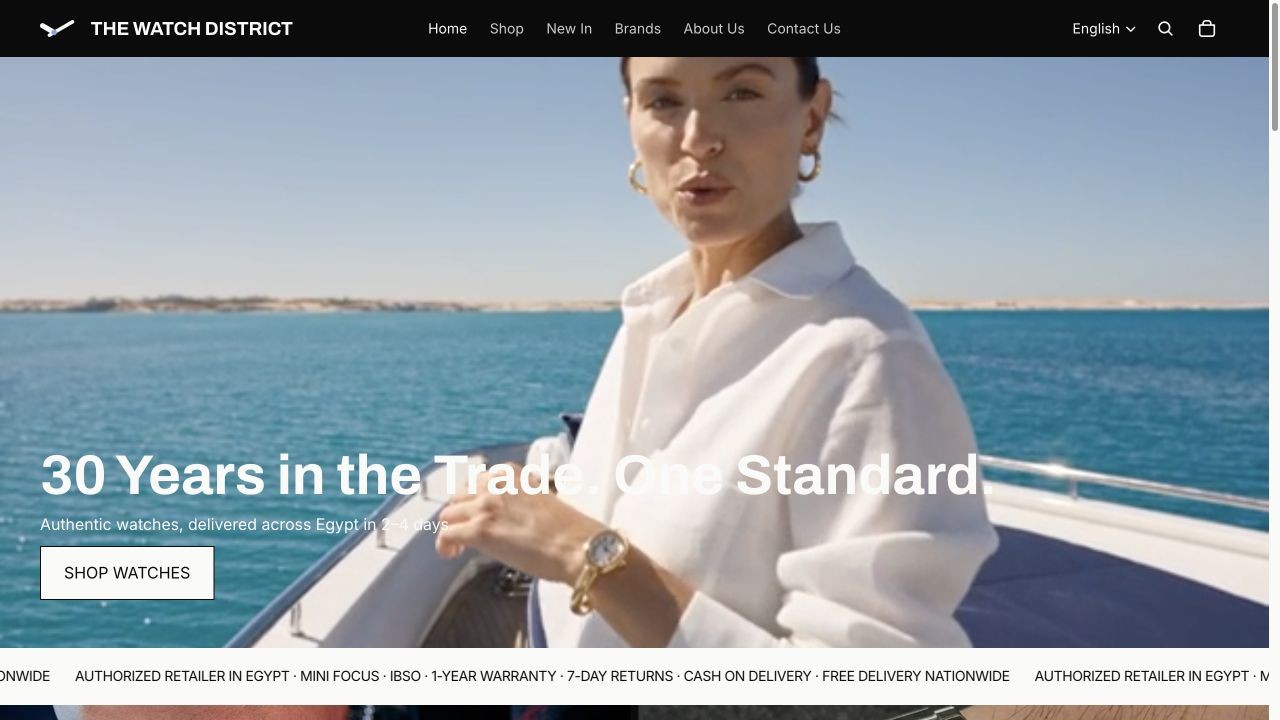
The homepage introduces the brand and gives shoppers routes into the range through brands, collections and featured watches.
-
Filter and compare
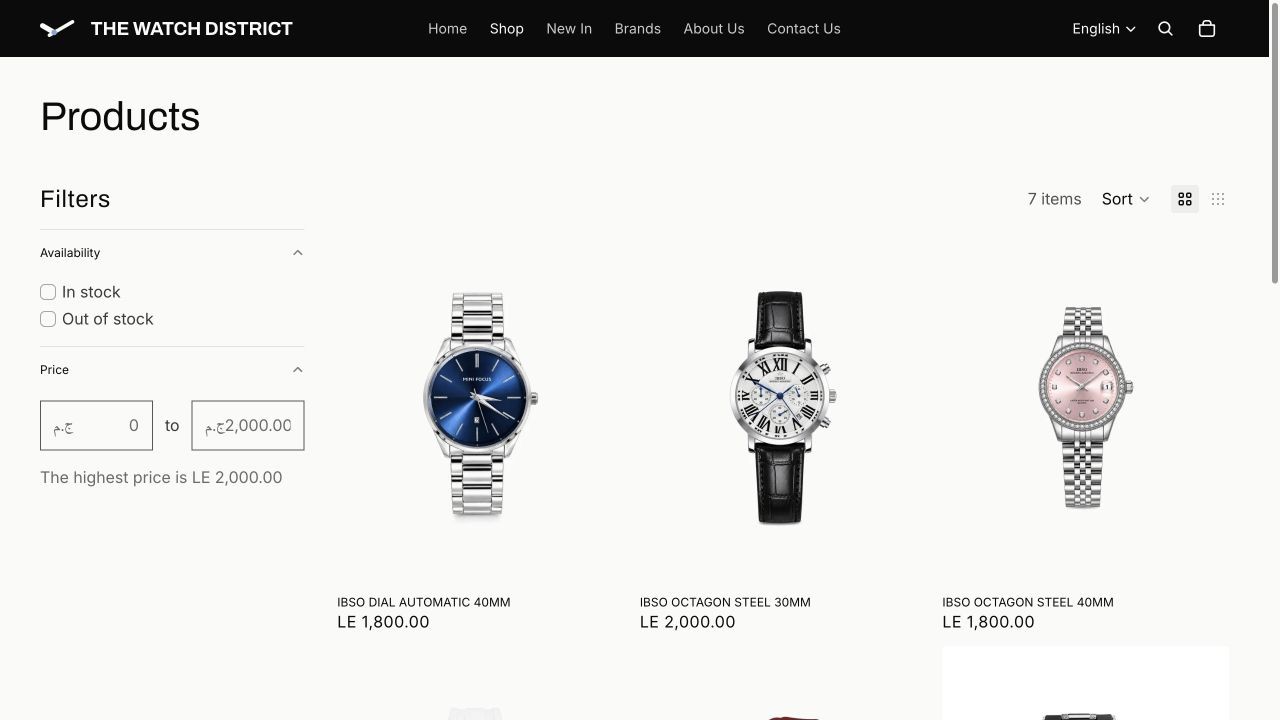
The catalog brings watches together with price and availability filters and a sorting control, so customers can narrow what they are looking at.
-
Review a watch
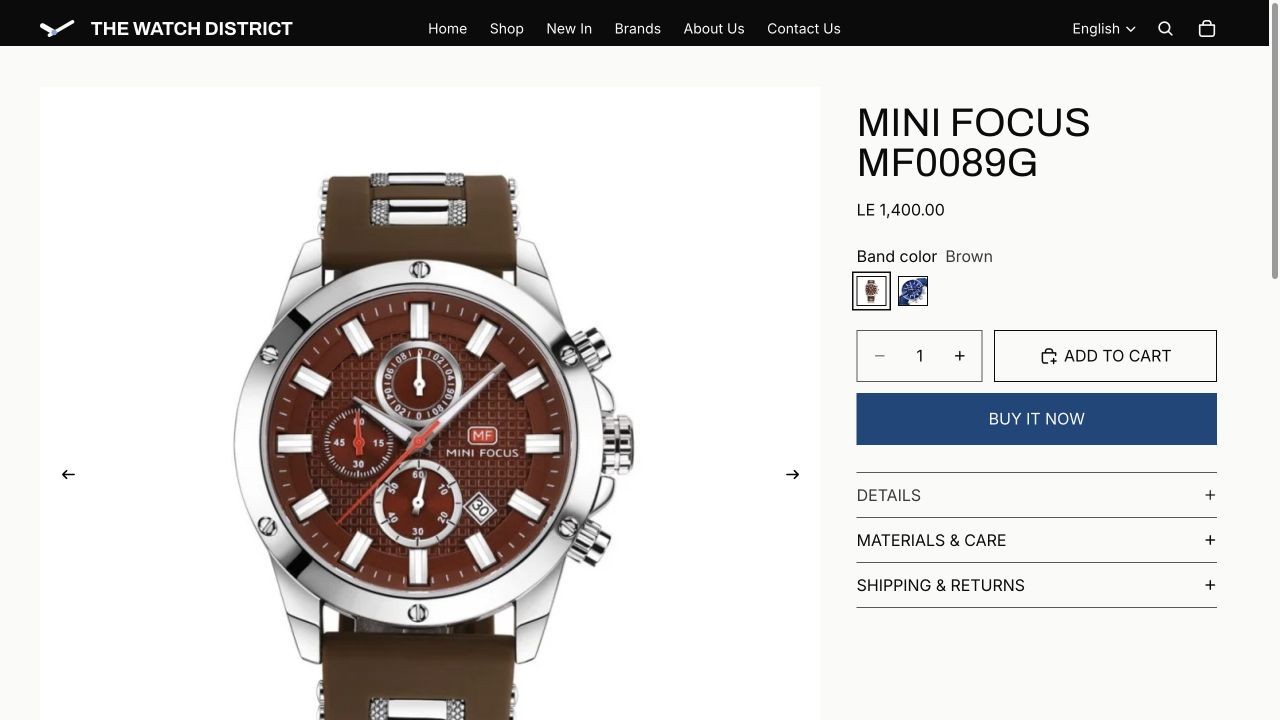
The product page puts photography, available options, pricing and purchase controls together. Customers can examine the watch before taking the next step.


Branding and e-commerce, built together.
- A distinct retail identityBranding created by Webify, with a consistent visual theme and guidelines applied across the store.
- Brand and collection browsingEntry points for MINI FOCUS, IBSO, men’s and women’s watches, and other collections.
- Filtering and sortingCatalog controls for availability, price and the order in which products are shown.
- Product photography and optionsImage galleries and product options that let shoppers examine individual watches.
- E-commerce purchase flowProduct selection, quantity controls and a shopping cart within the Shopify storefront.
- A responsive storefrontLayouts that adapt the catalog and product information for smaller screens.
The same identity, in a smaller space.
The mobile product page stacks the watch image, name, price and options above the purchase controls. Navigation moves into a compact header while the product stays the focus.
Every layout in the store adapts the same way, because that is where most of this audience arrives — a watch is something people look at on a phone long before they decide to buy one.

The identity first, then the store it had to live in.
The work started with the branding, because a first-time buyer has to have a reason to trust a name they have never bought from — and a template with a logo dropped into it does not give them one. Once the identity and its guidelines existed, the Shopify build applied them across every surface: homepage, brand and collection routes, catalog, product pages and cart.
30% more sales converted from the website channel since launch
Sales converted through the store, for a business that until now had only ever sold B2B.
Our read is that the identity did as much of the work as the storefront. Someone buying a watch from a name they have never heard of needs a reason to trust it before they need a price filter.
Webify opened a sales channel we simply didn't have before. We'd only ever sold B2B, and they understood exactly what it would take to bring our brand to individual customers — not just a store, but an identity people could trust. That's what's translating into results: a 30% increase in sales converted through the website since launch.
Building a direct-to-customer channel?
Tell us about your products, your brand and how you want to sell online. We can help shape the identity and the store around that goal.